
FAFSA Completion: GPRA Spotlight Series
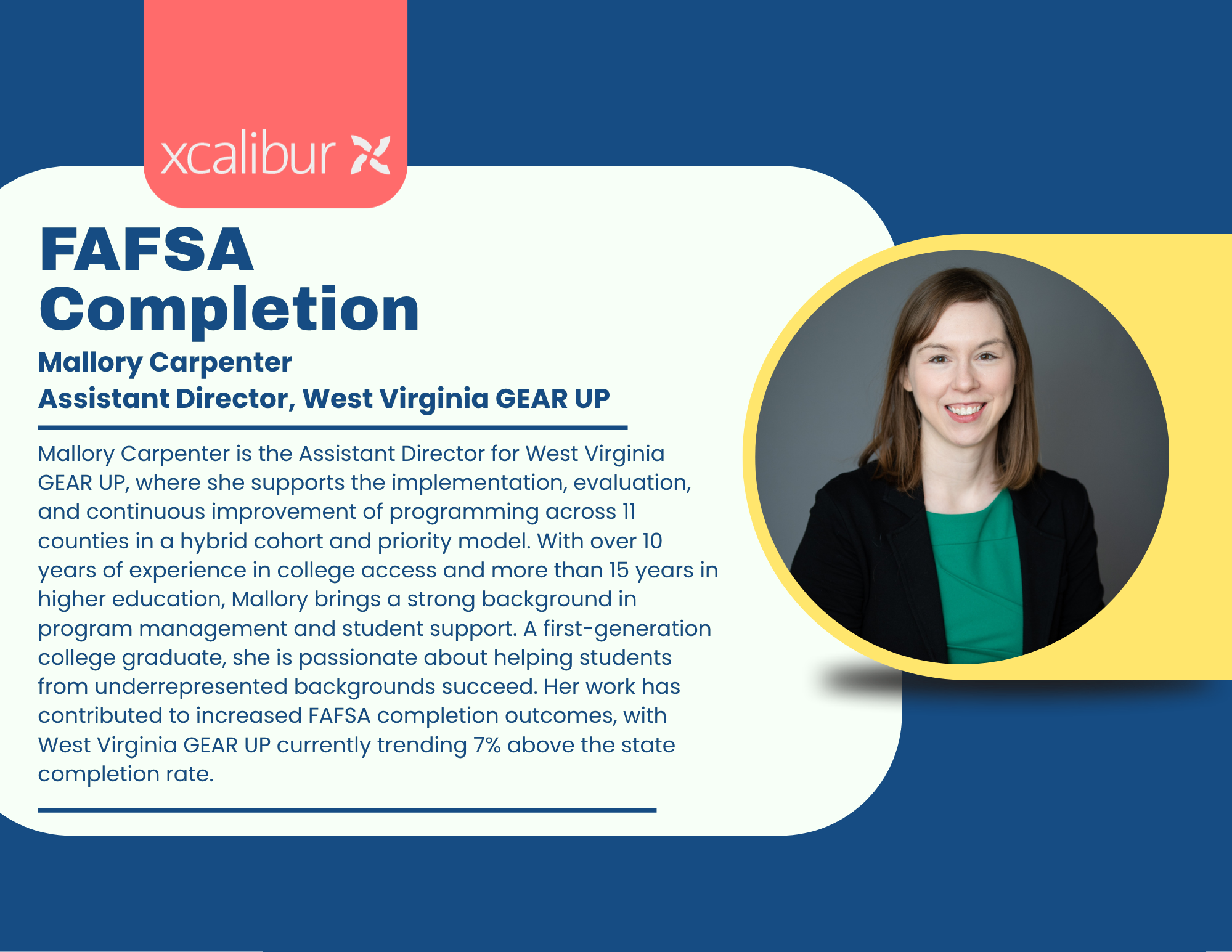
Insights from Mallory Carpenter, Assistant Director, West Virignia GEAR UP
As part of the 2026 Xcalibur Conference, we invited GEAR UP leaders from across the country to share their experiences improving key GPRA outcomes with a panel session during the conference. This article is part of our GPRA Spotlight Series which expands on the panel discussion.
Why FAFSA Completion Matters
FAFSA completion is one of the most important milestones in the college-going process. For many students, completing the FAFSA opens the door to financial aid opportunities that can make postsecondary education more affordable and accessible. Beyond financial aid itself, FAFSA completion often serves as an important step in helping students and families engage in conversations about college planning, affordability, and the transition from high school to postsecondary education.
Mallory Carpenter, Assistant Director of West Virginia GEAR UP, emphasized the connection between FAFSA completion and postsecondary enrollment.
“Data has shown that there are higher college-going rates for students who complete a FAFSA. FAFSA events also provide an opportunity for a conversation with students and their families regarding the admission/transition process and financial aid options.”
For West Virginia GEAR UP, FAFSA completion is not viewed as a standalone task, but rather as part of a broader effort to help students understand and prepare for life after high school.
Creating a Culture of FAFSA Completion
Like many GEAR UP programs, West Virginia GEAR UP incorporates FAFSA workshops and completion events into its annual work plan. However, the program has also developed statewide initiatives designed to encourage participation and celebrate success.
One example is the 21st Century Scholars Initiative, which requires students to complete the FAFSA to earn a graduation cord. Another is the Champions of College Access Initiative, which recognizes schools that achieve FAFSA completion benchmarks. Schools meeting these goals are celebrated through statewide recognition efforts.
These initiatives create additional motivation for both students and schools while helping establish FAFSA completion as an important milestone in the college-going process.

It Takes a Village
When reflecting on what has been most important in improving FAFSA completion outcomes, Mallory pointed to the importance of collaboration and shared responsibility.
“It takes a village! This isn’t something that just one person or school can do; there has to be programmatic support behind it.”
This sentiment echoed a broader theme heard throughout the GPRA Panel discussion: meaningful student outcomes are rarely the result of a single intervention. Success often depends on coordinated efforts among GEAR UP staff, school personnel, administrators, families, and community partners who work together to support students throughout the process.
Strategies Supporting FAFSA Completion
FAFSA workshops and completion events
Student recognition through the 21st Century Scholars Initiative
School recognition through the Champions of College Access Initiative
Direct support from GEAR UP staff
Statewide efforts to promote college access and affordability
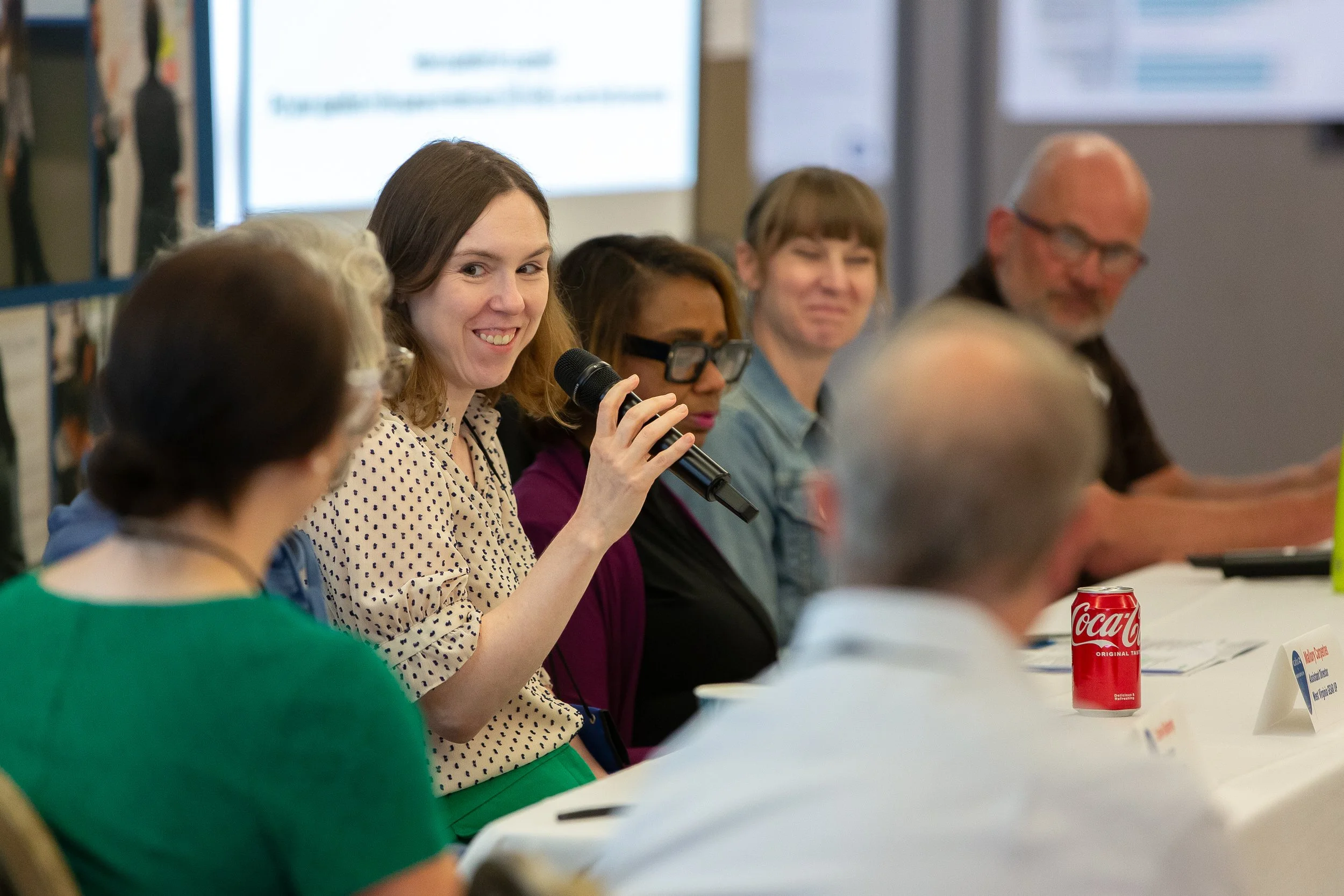
Going Beyond FAFSA Nights
One of the additional questions raised during the conference focused on whether there were specific activities beyond FAFSA nights that helped move the needle on completion rates.
According to Mallory, one of the most impactful strategies has been deploying central office staff directly into schools to provide hands-on support to students completing the FAFSA.
“Our state initiatives have been a big help. Sending our central office staff directly into the schools to work with students on FAFSAs has also been key this year.”
This support has become increasingly important as schools navigate staffing challenges.
“Our school counselors are completely overwhelmed after county/district staffing cuts and just don’t have the time to spend on it. Devoting our staff’s time has pushed this year to our highest completion numbers to date.”
This experience highlights the importance of understanding local needs and adapting support strategies accordingly. In some cases, providing additional personnel and targeted assistance can make a significant difference in helping students complete critical milestones.
Advice for Other GEAR UP Programs
When asked what advice she would offer other GEAR UP programs focused on improving FAFSA completion rates, Mallory encouraged programs to think creatively and remain flexible.
“Don’t consider just one avenue or way of getting FAFSAs completed. Try out competitions, incentives, and different methodologies of completion to see what works best for you and your students/families.”
The needs of students and families vary from community to community, and successful programs are often willing to test multiple approaches before identifying the strategies that work best in their local context.

Key Takeaways for Practitioners
Use multiple strategies rather than relying on a single FAFSA event.
Consider incentives and recognition programs for students and schools.
Engage families in conversations about financial aid and college affordability.
Provide direct support when school staff capacity is limited.
Continuously evaluate and adapt approaches based on student needs.
Additional Perspective: Maintaining Access Through Community Partnerships
During the panel discussion, participants also asked about West Virginia GEAR UP's exploration of using providers who are not traditional school employees to deliver services.
Mallory noted that maintaining student access requires strong collaboration with schools and districts from the outset.
“This has to be a ground up conversation closely linked with the schools, administrative staff, and the districts themselves to make sure there is buy in and they see the value of our program and services.”
She shared an example of a school currently supported by two site coordinators who are no longer full-time school employees. Through close collaboration with school administration, the program ensured these staff members maintained access to the systems and processes needed to continue supporting students.
“So far, it has been working well and access hasn’t been an issue.”
The experience demonstrates that innovative staffing models can be successful when built on strong relationships, communication, and trust.
Final Thoughts
FAFSA completion is often viewed as a single form or a single event, but Mallory's experience highlights the broader systems and supports that contribute to success. From statewide initiatives and recognition programs to direct student assistance and strong partnerships, improving FAFSA completion requires intentional planning, collaboration, and persistence.
As Mallory's advice reminds us, there is no one-size-fits-all solution. Programs that are willing to explore multiple strategies, adapt to local needs, and engage students and families throughout the process are often best positioned to help students take this important step toward their postsecondary goals.
Come back and visit us again soon!!
The next article in the GPRA Spotlight Series on Postsecondary Enrollment will be available on 7/2/2026.