
Postsecondary Enrollment: GPRA Spotlight Series
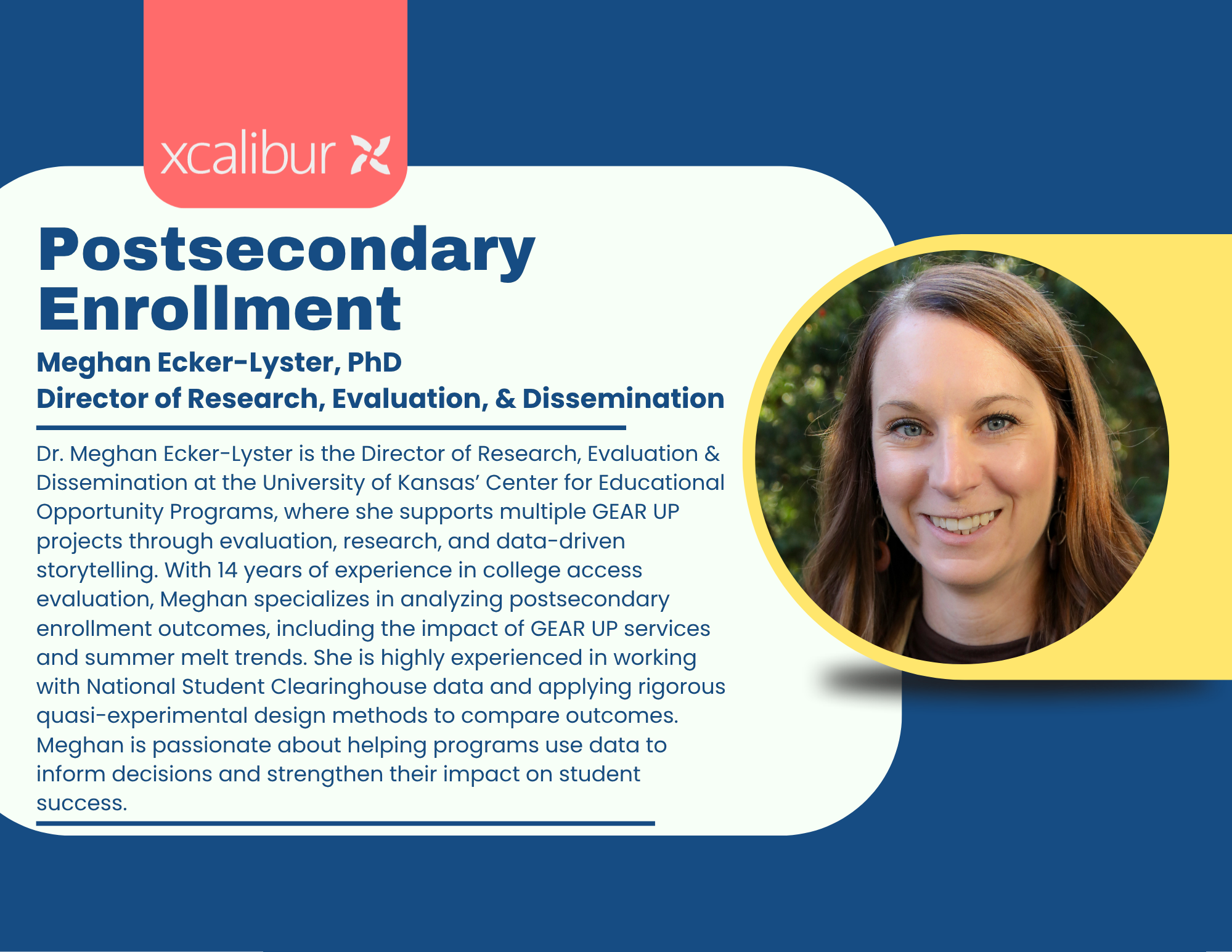
Insights from Meghan Ecker-Lyster, PhD Director of Research, Evaluation, & Dissemination
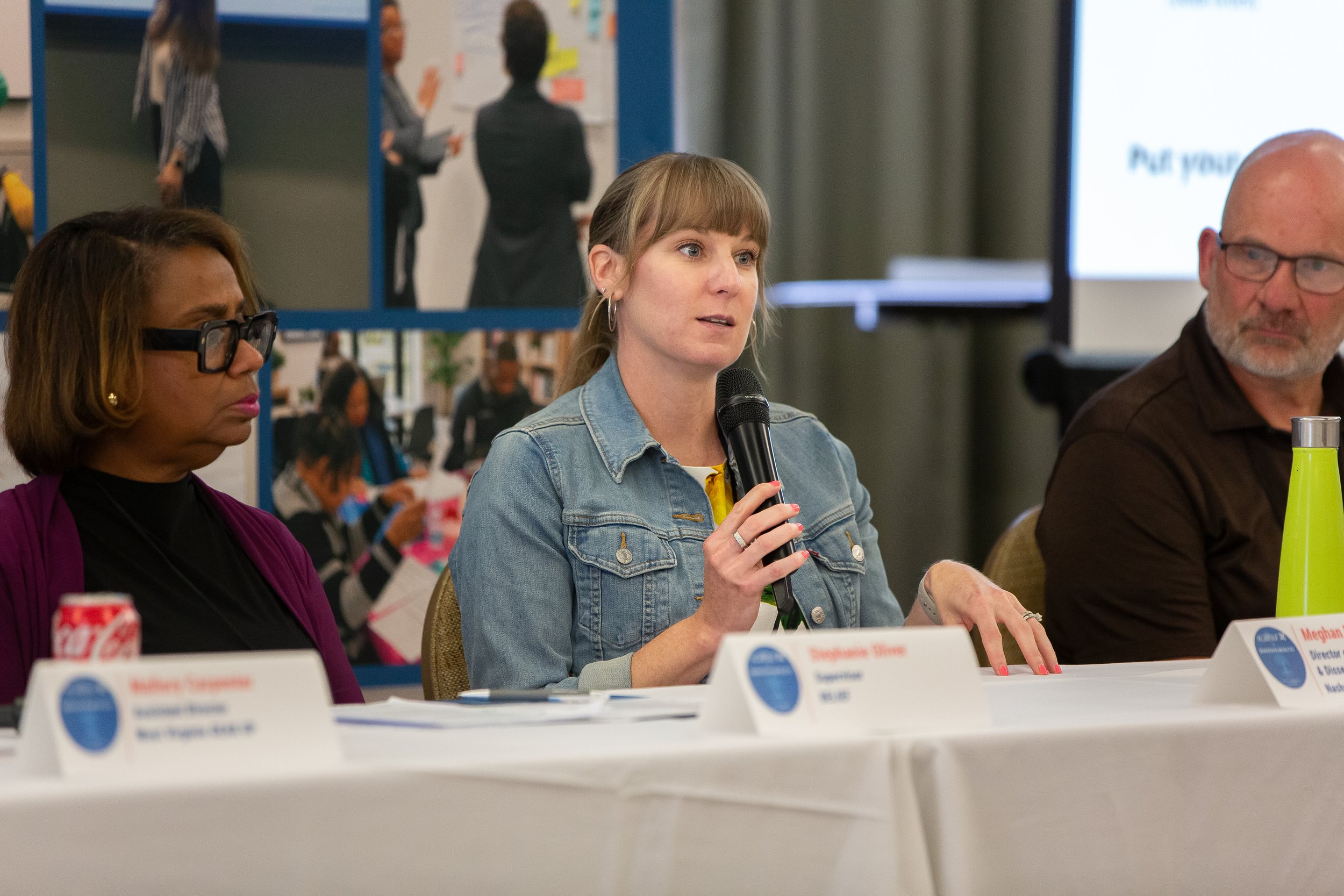
As part of the 2026 Xcalibur Conference, we invited GEAR UP leaders from across the country to share their experiences improving key GPRA outcomes with a panel session during the conference. This article is part of our GPRA Spotlight Series which expands on the panel discussion.
Why Postsecondary Enrollment Matters
Postsecondary enrollment is often viewed as one of the culminating outcomes of GEAR UP programming. It reflects whether students successfully transition from high school into postsecondary education and serves as an important measure of how well programs are preparing students for life after graduation.
For Meghan Ecker-Lyster, Director of Research, Evaluation & Dissemination at the University of Kansas Center for Educational Opportunity Programs, immediate postsecondary enrollment represents something even bigger.
“In my opinion, this GPRA is the ultimate prize at the end of our 6-7 year long journey. We spend years working with students to prepare them for life after secondary school, and this GPRA is a way to measure the effectiveness of that work.”
While many GEAR UP activities focus on building knowledge, skills, and aspirations throughout middle and high school, postsecondary enrollment provides an opportunity to examine whether those efforts are translating into successful transitions after graduation.
Tracking the Milestones Along the Way
One of the key challenges with postsecondary enrollment is that the outcome itself occurs at the very end of the student experience. By the time enrollment data becomes available, there is little opportunity to intervene with students who may have fallen off track.
To address this challenge, Meghan and her team developed a Senior Milestone Dashboard that allowed both GEAR UP and district staff to monitor students' progress throughout their senior year.

By monitoring these activities in real time, staff were able to identify students who were falling behind and provide targeted support before graduation.
“This Dashboard allowed us to track progress toward postsecondary enrollment in real time by examining the key steps that students would need to complete to be on the path to enrollment.”
The dashboard also helped staff identify trends among specific student groups and implement interventions where they were needed most.
“We were able to identify certain subgroups of students who were falling behind and implement targeted interventions to address the challenge they might have been facing.”
The dashboard tracked important milestones associated with postsecondary enrollment, including:
Postsecondary application submissions
FAFSA completion
Other enrollment-related milestones
Progress toward key college-going benchmarks
For example, the team found that male students with lower GPAs were completing critical enrollment milestones at lower rates than their peers, creating an opportunity for more focused support.
Understanding the Complexity Behind the Outcome
While postsecondary enrollment is an important indicator of program success, Meghan emphasized that it is also one of the most complex GPRA measures.
“While we know this outcome is critical to demonstrate the success of GEAR UP, we also know that this indicator is very nuanced and there are a lot of external forces that can impact the ultimate outcome.”
Unlike some indicators that are more directly influenced by program activities, postsecondary enrollment decisions are shaped by a wide range of personal, financial, and family factors.
“For example, students’ financial and family situations have a huge impact on their ultimate decision on whether and where they enroll in college.”
This perspective serves as an important reminder that even when students are academically prepared and college-ready, external circumstances can influence their final decisions. Understanding those realities can help programs develop more comprehensive supports and avoid viewing enrollment outcomes through an overly simplistic lens.
Advice for Other GEAR UP Programs
When asked what advice she would offer programs looking to improve postsecondary enrollment outcomes, Meghan encouraged programs to focus on the indicators that come before enrollment itself.
“You have to start thinking about what early indicators and outcomes have been shown in the research literature to relate to this outcome.”
Rather than waiting until students reach their senior year, programs should identify the milestones and experiences that are associated with successful enrollment and begin monitoring them early. She also cautioned against waiting until the end of the grant cycle to focus on enrollment outcomes.
“You cannot wait until the final years of your grant to measure this outcome because by that time it’ll be too late.”

Key Takeaways for Practitioners
Identify and monitor early indicators linked to postsecondary enrollment.
Track student progress throughout high school, not just during senior year.
Use data systems to identify students who may need additional support.
Recognize that enrollment decisions are influenced by factors both inside and outside a program's control.
Build interventions around milestones that research has shown to predict enrollment success.
Final Thoughts
Postsecondary enrollment may be measured at a single point in time, but it is the result of years of preparation, planning, and support. Meghan's experience highlights the importance of looking beyond the final outcome and focusing on the milestones that help students reach it.
By tracking progress throughout high school, identifying students who may be falling behind, and implementing targeted interventions, programs can create opportunities to support students before critical decisions are made. At the same time, understanding the complex factors that influence enrollment can help programs approach this GPRA with both intentionality and perspective.
As Meghan's insights remind us, improving postsecondary enrollment is not about waiting for the final result—it's about building the pathway that leads students there.
Come back and visit us again soon!!
The next article in the GPRA Spotlight Series on Postsecondary Persistence will be available on 7/9/2026.