
Postsecondary Persistence: GPRA Spotlight Series
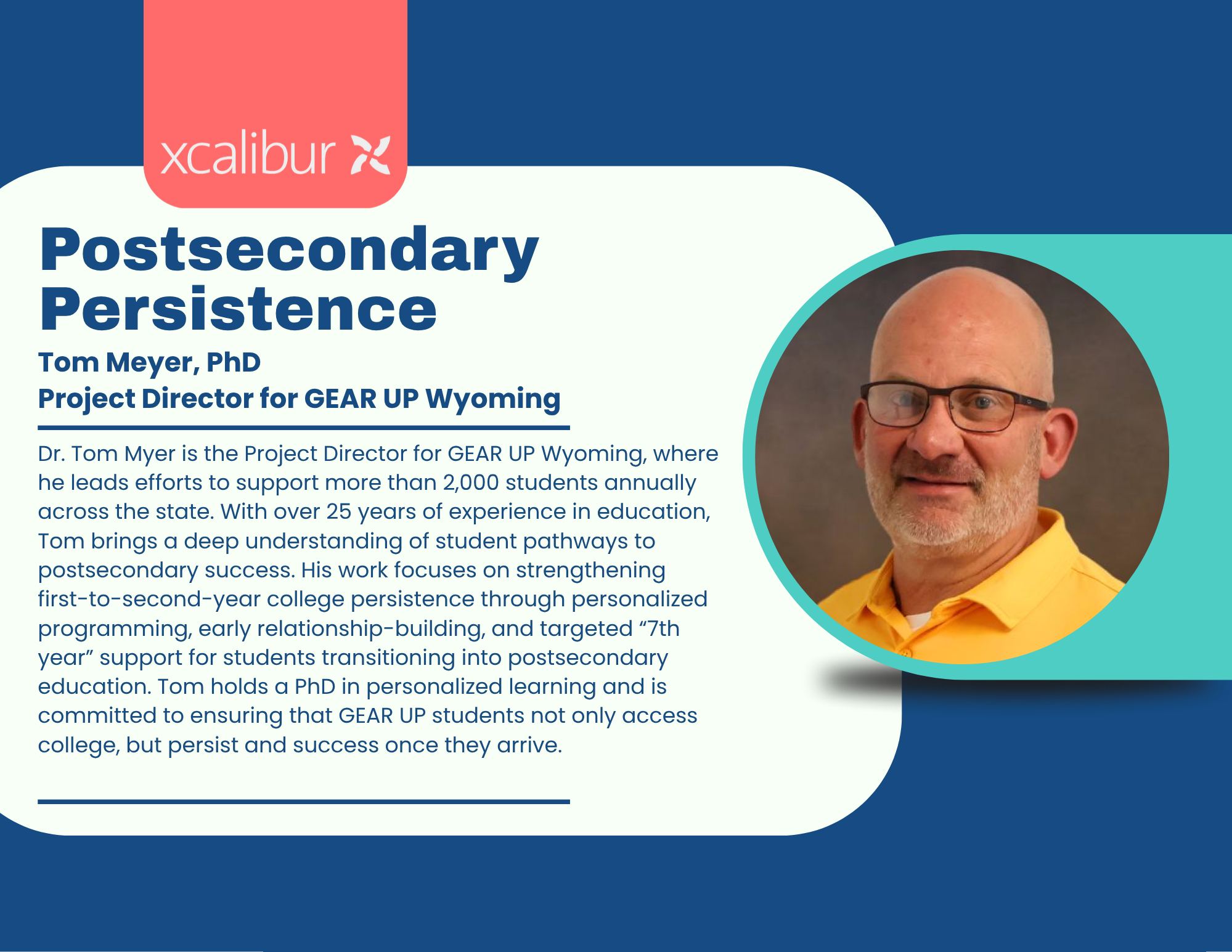
Insights from Tom Meyer, PhD
Project Director for GEAR UP Wyoming
As part of the 2026 Xcalibur Conference, we invited GEAR UP leaders from across the country to share their experiences improving key GPRA outcomes with a panel session during the conference. This article is part of our GPRA Spotlight Series which expands on the panel discussion.
Why Postsecondary Persistence Matters
Postsecondary persistence helps us understand whether students continue their educational journey after initial enrollment. It moves the conversation beyond whether a student started college and focuses on whether they remained enrolled, continued making progress toward their goals, and stayed on a path toward earning a credential or degree. Research consistently shows that students who persist from their first year to their second year of postsecondary education are significantly more likely to complete a degree or credential. As a result, persistence provides important insight into whether students are successfully navigating the transition from high school through postsecondary education.
For Tom Meyer, Project Director of GEAR UP Wyoming, persistence represents an opportunity to understand what happens after students leave high school and how programs can continue supporting them during one of the most significant transitions of their lives.
"The success of our students extends well beyond high school graduation. While graduation is an important milestone, we must continue to focus on the broader picture by following students as they pursue their postsecondary education, training, and career pathways."
Tom emphasized that persistence data helps programs better understand whether students are continuing toward their goals and identify opportunities for support when challenges arise.
"This allows us to better understand whether students are continuing toward their goals and identify ways we can support them during the transition from high school to adulthood."
Supporting Students Beyond Enrollment
Many of the services that help students enroll in college happen before high school graduation. However, postsecondary persistence requires GEAR UP programs to continue supporting students as they adjust to a new environment, new expectations, and new responsibilities.
Students often encounter challenges during their first year of postsecondary education, including academic adjustments, financial concerns, homesickness, social pressures, balancing work and school responsibilities, and uncertainty about educational and career goals.

To support persistence, GEAR UP Wyoming has developed a network of supports designed to help students stay connected and access assistance when challenges arise. The program utilizes staff at partner sites across the state to serve as freshman advisors and support students during their transition into postsecondary education. Advisors collaborate across institutions, helping students establish relationships and support networks before they even arrive on campus.
“This helps establish relationships and connections before students arrive on campus, creating a stronger support network from the outset.”
Recognizing that every student's experience is unique, the Wyoming GEAR UP program places a strong emphasis on understanding individual circumstances and providing personalized support.
Tom shared that GEAR UP Wyoming addresses these challenges by intentionally maintaining relationships with students after graduation.
"Maintaining relationships with students after graduation is a critical part of this work."
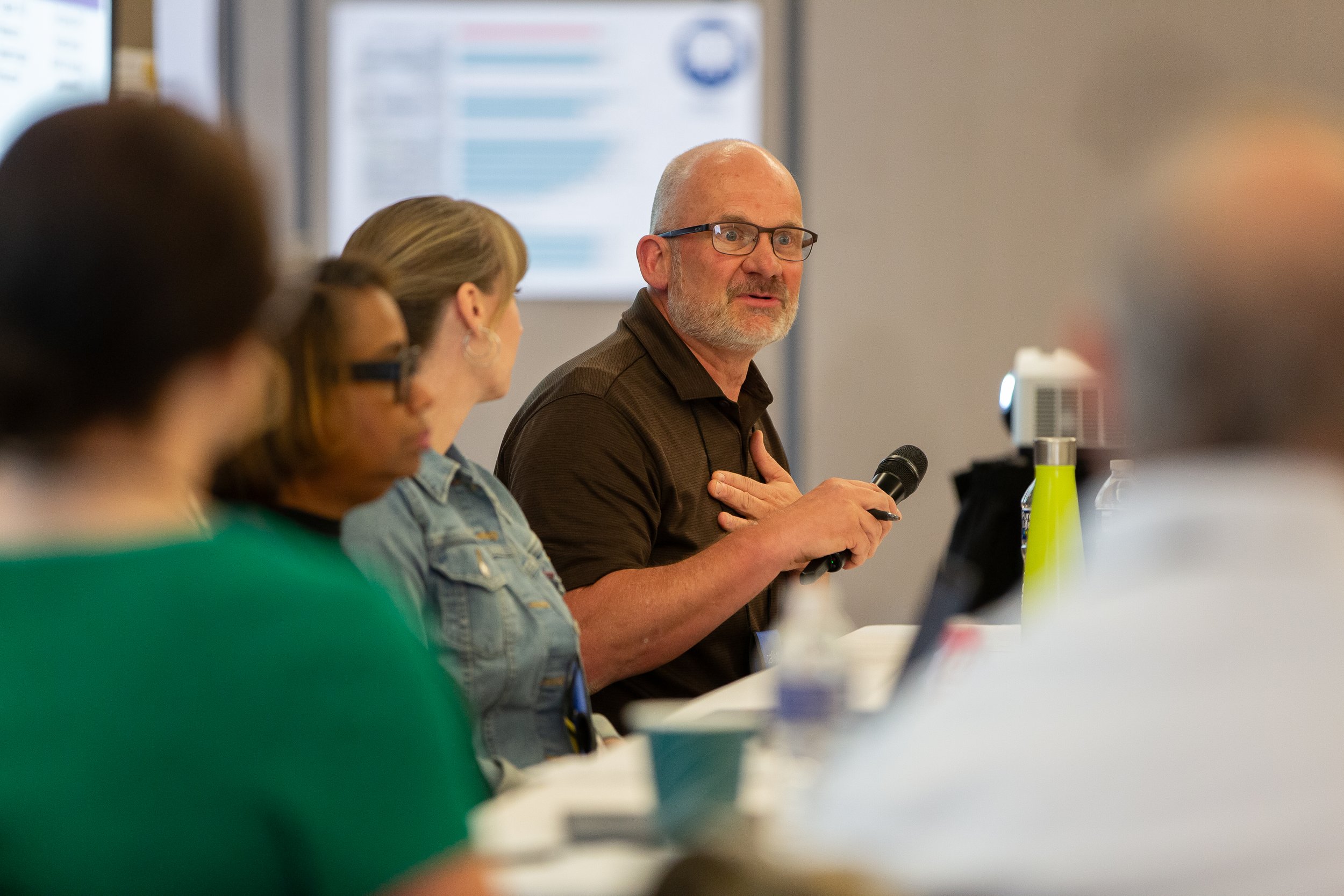
These efforts are designed to ensure students have trusted contacts and support systems available as they navigate their postsecondary experiences.
Every Student Has a Story
When reflecting on what it takes to improve persistence outcomes, Tom continued to emphasize the importance of relationships and trust.
“Students have different obstacles, and we must assist them in overcoming these obstacles. But, this takes trust and that can only be developed through relationship building and showing we care.”
Tom emphasized the importance of marrying both postsecondary quantitative data with student experiences. By talking directly with students, building trust over time, and gaining a deeper understanding of what is and is not working in individual student supports, programs can gain a more complete understanding of the factors influencing persistence.
Advice for Other GEAR UP Programs
When asked what advice he would offer programs seeking to improve persistence outcomes, Tom encouraged practitioners to start with both relationships and data. Understanding persistence requires ongoing reflection and a willingness to evaluate whether current supports are meeting students' needs.
“Look at what you are doing. What is the data saying? Also, having an outside person look at [the data] is vital.”
External reviewers, evaluators, and partners can often identify trends, challenges, or opportunities that may not be immediately visible to those working within the program every day.
Most importantly, Tom encouraged programs to view persistence as part of a longer continuum of support. Persistence is not built during a student's first semester of college. It is often the result of relationships, trust, and support systems that have been established over many years.

Key Takeaways for Practitioners
Build trust early so students feel comfortable seeking support when challenges arise.
Maintain relationships with students beyond high school graduation.
Create opportunities for regular communication during the first year of college.
Combine quantitative data with direct student feedback.
Look for trends across multiple years rather than relying on a single data point.
Use external partners and evaluators to gain additional perspectives on persistence outcomes.
Final Thoughts
Postsecondary enrollment is an important milestone, but it is only the first step in a student's postsecondary journey. Persistence helps us understand whether students are continuing to build on that momentum and move closer to earning a degree, credential, or other postsecondary achievement.
Tom's experience highlights that supporting persistence requires programs to look beyond enrollment numbers and focus on what happens after students arrive on campus. By maintaining connections with students, understanding the challenges they face, and providing targeted support during critical transition periods, programs can help students stay on track toward their long-term goals.
Ultimately, persistence is about more than remaining enrolled from one year to the next. It is about helping students navigate obstacles, continue progressing toward completion, and achieve the outcomes they have worked toward throughout their GEAR UP experience.
Come back and visit us again soon!!
The next article in the GPRA Spotlight Series on High School Graduation will be available on 7/16/2026.