
High School Graduation: GPRA Spotlight Series
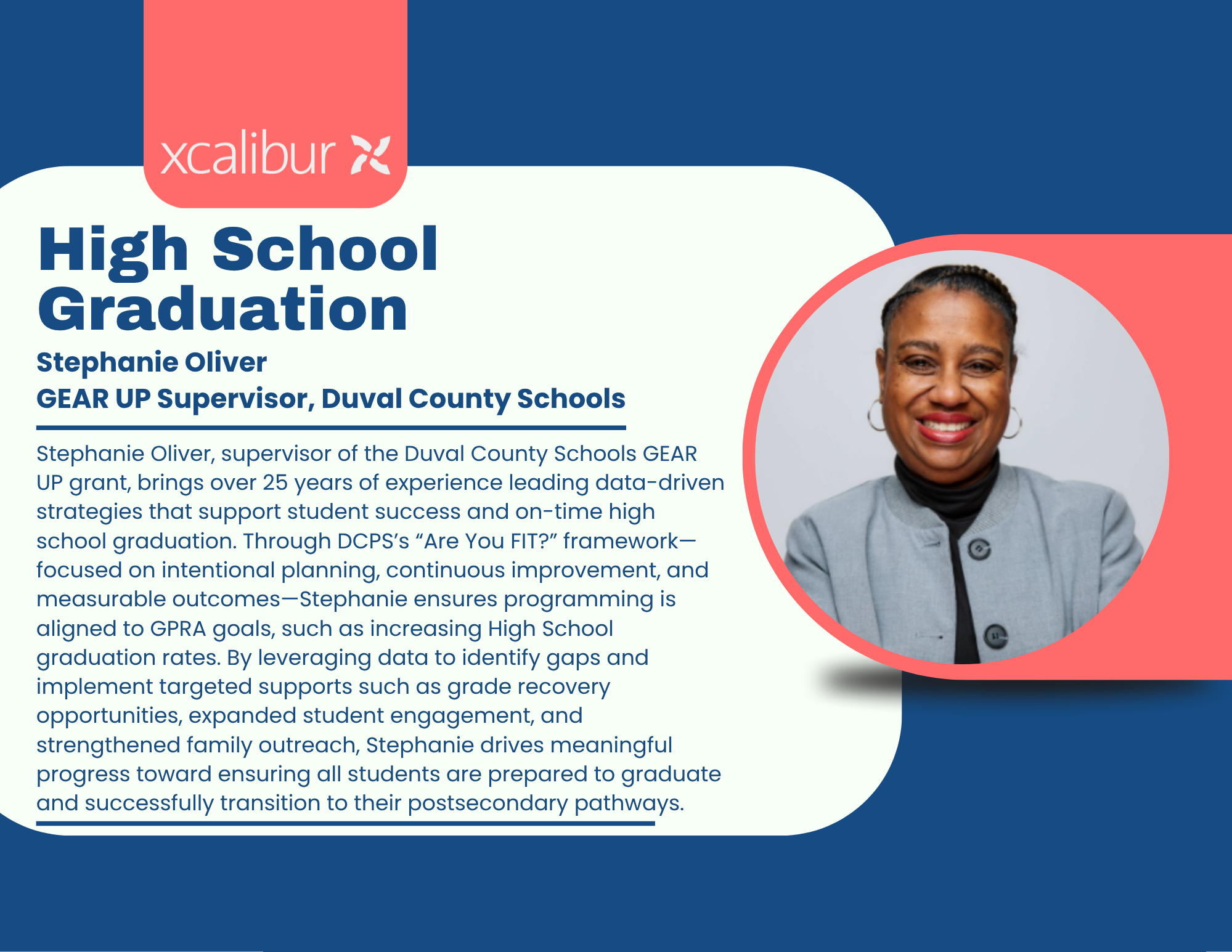
Stephanie Oliver, GEAR UP Supervisor of Duval County Schools
As part of the 2026 Xcalibur Conference, we invited GEAR UP leaders from across the country to share their experiences improving key GPRA outcomes with a panel session during the conference. This article is part of our GPRA Spotlight Series which expands on the panel discussion.
Why High School Graduation Matters
High school graduation is one of the most significant milestones in a student's educational journey. It represents years of effort, perseverance, and growth while opening doors to future educational, career, and economic opportunities.
For Stephanie Oliver, GEAR UP Supervisor with Duval County Schools, graduation is about much more than earning a diploma.
“It provides an opportunity for long-term stability and a launch pad to future success.”
She also emphasized the broader impact graduation can have on families and communities.
"It is a starting block to family rethinking and prioritizing educational growth.”
As one of GEAR UP's key GPRA indicators, high school graduation reflects not only student achievement but also the effectiveness of the systems and supports designed to help students stay on track toward their goals.
Identifying the Gaps
One of the most valuable aspects of Stephanie’s presentation during the panel was her willingness to share challenges her team encountered and the steps they took to address them.
Early on, Duval County Schools identified several concerns that were affecting their ability to support students effectively:
Inconsistencies between partner invoices and documented service participation
Lower-than-expected student participation rates
Gaps in services for certain student populations, particularly male students
A significant number of students who were behind in credits and at risk of not graduating on time
These issues were not identified through assumptions—they were uncovered through intentional data review and monitoring.
"[We found] only 56% of students were being served, and a lack of male student [participants]. When reviewing academic [transcripts] we discovered approximately 300 students were behind in credits.”
This information provided a clear picture of where intervention was needed and helped drive the development of targeted solutions.

Moving from Data to Action
Rather than viewing these findings as setbacks, Stephanie and her team used them as opportunities to improve systems and strengthen support for students.
Strengthening Service Monitoring
To address discrepancies between reported and documented services, the team implemented several accountability measures:
Established sign-in protocols
Created a digital monitoring system
Provided monthly data reports to partner leadership
Conducted observational monitoring at school sites
These changes helped ensure services were accurately documented and provided greater visibility into program implementation.
Lessons Learned
Reflecting on this work, Stephanie highlighted several important lessons about improving graduation outcomes.
“A monitoring system must be established.”
Second, meaningful solutions require collaboration and input from multiple perspectives.
“All stakeholders need to be heard and considered.”
She also emphasized the importance of being intentional in both planning and implementation, while remaining willing to think creatively when traditional approaches are not producing desired results. Perhaps most importantly, Stephanie stressed the value of relationships.
"Thinking outside the box and establishing relationships within the school community is vital."
These relationships help programs better understand student needs, identify barriers, and build the partnerships necessary to support graduation success.
Increasing Student Participation
To improve student engagement and participation rates, the team focused on identifying missed opportunities and creating additional access points for students.
Strategies included:
Brainstorming with staff to identify participation barriers
Requesting access to students during existing school events
Presenting during school-based activities
Creating targeted student subgroups for specialists and supervisors to support
These efforts helped expand student access to services while ensuring support reached students who might otherwise be overlooked.
Supporting Students at Risk of Not Graduating
When the team identified students who were behind in credits, they implemented several targeted supports:
Professional development for specialists and partners on reading academic data histories
Parent meetings focused on graduation requirements and student needs
Increased collaboration with school personnel
A Summer Recovery Program designed to help students recover credits and stay on track for graduation
Together, these strategies helped create a more proactive approach to identifying and supporting students who were at risk of falling behind.
Advice for Other GEAR UP Programs
When asked what advice she would offer other programs focused on improving graduation outcomes, Stephanie encouraged practitioners to:
Start with the data, and what story is it telling?
Identify stakeholders who can help interpret and respond to those findings
Dig deeper into understanding the data and what it is revealing about student experience, participation, and outcomes
Develop a plan when outcomes are not aligning with expectations, and utilization of a SWOT analysis can help better understand barriers,

Key Takeaways for Practitioners
Establish systems to monitor both services and outcomes.
Regularly review participation and graduation data.
Engage stakeholders in interpreting data and developing solutions.
Identify students at risk as early as possible.
Use academic history data to inform interventions.
Develop targeted supports for student groups that may be underserved.
Be willing to adjust strategies when data reveals gaps.
Additional Question: Summer Recovery Programs
During the panel discussion, participants wanted to learn more about Duval County’s Summer Recovery Program, a highlighted service mentioned by Stephanie during the panel.
The program is offered in person and operates five half-days per week for six weeks during the summer. Students also have opportunities to complete work outside of program hours from home.
To support implementation, the district hires certified English Language Arts and Mathematics teachers to work directly with participating students.
This structure allows students to recover credits while receiving targeted academic support from qualified educators.
Final Thoughts
High school graduation outcomes do not improve by chance. They improve when programs intentionally monitor progress, identify barriers, listen to stakeholders, and respond with targeted supports.
Stephanie's experience demonstrates the power of using data not simply as a reporting tool, but as a catalyst for action. By examining participation trends, monitoring service delivery, reviewing academic histories, and collaborating with school communities, programs can identify students who need support and intervene before they fall too far behind.
As her reflections remind us, the numbers tell an important story—but it is what programs do with that story that ultimately helps students cross the graduation stage and move toward future success.
Come back and visit us again soon!!
The final article in the GPRA Spotlight Series on Algebra I, will coming soon.